Why In-State Climate Investment Is a Fiduciary Opportunity for Public Pension Funds
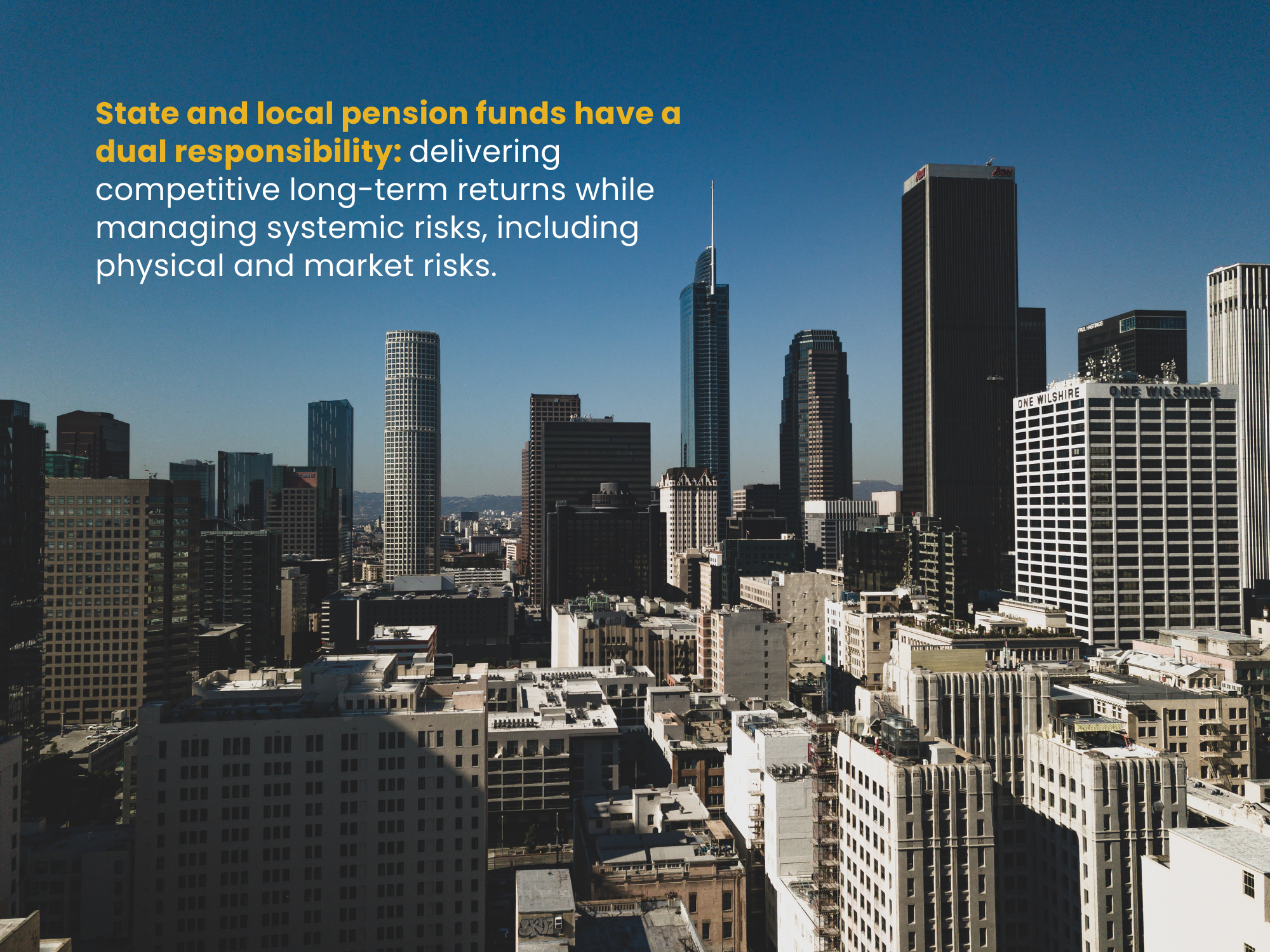
State and local pension funds have a dual responsibility: delivering competitive long-term returns while managing systemic risks, including physical and market risks. One powerful yet underutilized strategy is to invest in resilient infrastructure and efficiency opportunities within their own states and regions. These in-state investments can generate returns, support local businesses, create quality jobs, and strengthen regional economies, but many funds struggle to fully realize this potential.
The challenges are not a lack of opportunity but a set of structural and technical barriers embedded in how funds operate.
Boards often lack long-term environmental and market trends; political pressures limit long-term planning; and risk mitigation strategies are frequently siloed, delegated to a single staffer rather than integrated into core asset allocation. At the same time, reliance on external managers and short-term performance incentives can create inertia, discouraging the innovative approaches needed to target in-state opportunities.
As stated in our latest white paper, Unlocking State Power: Overcoming Barriers to In-State Climate Investment for Pension Funds, “Given their 30-year-plus time horizon and the fundamental mission to meet pension obligations, asset owners must move beyond passive allocation to become active drivers of sustainable investing.” By doing so, pension funds can align fiduciary duty with long-term portfolio resilience. This includes creating dedicated teams to explore regional opportunities, piloting smaller-scale initiatives to build experience, and establishing clear investment policies that prioritize resilient asset development.
And, there are tangible pathways for public funds to get started. Fixed-income programs, such as green and sustainability-linked bonds, can fund energy-efficient infrastructure, affordable housing, or water projects. Private equity and real asset funds can target local resiliency projects, such as renewable energy farms, modernized transit systems, and robust water and energy grids. Economically Targeted Investments (ETIs) offer a way to combine financial returns with societal impact, directly supporting local economies while addressing climate risk.
Several U.S. pension funds are already leading the way. The New York State Common Retirement Fund, CalPERS, and the Maryland State Retirement and Pension System have developed targeted infrastructure and resilience programs that demonstrate the potential to combine fiduciary responsibility with local impact. These examples show that with strategic planning, operational capacity, and governance alignment, in-state climate investments are possible and can be financially rewarding.
For trustees, fund managers, and policymakers, the message is clear: unlocking these opportunities requires proactive leadership, dedicated capacity, and transparent reporting.
To learn more about how state pension funds can overcome barriers and strategically deploy capital to support local economic and infrastructure modernization solutions, download the full white paper, Unlocking State Power: Overcoming Barriers to In-State Climate Investment for Pension Funds.