Resource: Managing Climate Risk and Opportunity in Private Market Investments
Private market investments now make up a significant and growing share of public pension portfolios. Over the last twenty years, pension funds across the country have steadily shifted capital away from traditional stocks and bonds and into private equity, private credit, infrastructure, real estate, and venture capital. The goal has been clear: improve performance, diversify risk, and meet long-term obligations to retirees.
But as private market exposure grows, so do the questions.
Private investments operate differently from public markets. They are less transparent, harder to value, and often lock up capital for years at a time. Fees are higher. Information is scarcer. And unlike public companies, most private firms are not subject to routine disclosure requirements or shareholder voting. For pension trustees, staff, union leaders, and beneficiaries, that creates a real challenge: how do you fully understand what your fund owns, what risks you’re carrying, and how climate and labor issues show up inside these deals?
These questions are becoming even more urgent as private capital plays a larger role in shaping the energy system, housing markets, utilities, and infrastructure. That means private-market decisions are deeply connected to both the climate transition and climate risk.
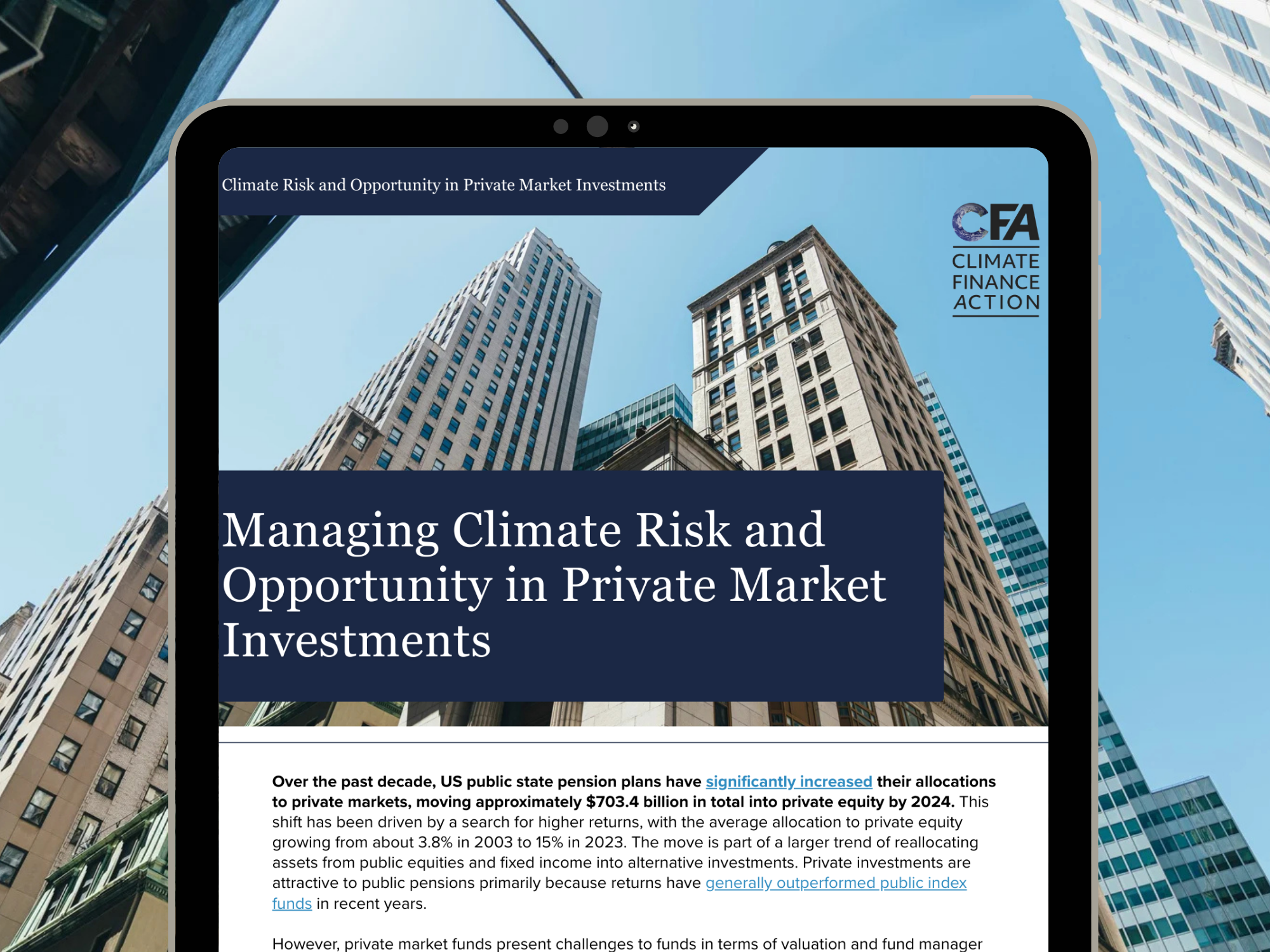
To help public pension stakeholders navigate these shifts, Climate Finance Action created a new resource: Managing Climate Risk and Opportunity in Private Market Investments.
This explainer is designed as a practical, accessible tool for anyone trying to make sense of how private markets intersect with fiduciary duty, labor, and long-term climate exposure. Readers will find:
A clear breakdown of the core private investment strategies pension funds use today and an explanation of where climate-related risks and opportunities tend to appear within each.
Practical approaches funds are adopting to strengthen oversight and accountability, including climate and labor expectations in manager selection, long-term risk modeling, targeted investments in climate-resilient infrastructure, and co-investing strategies that can increase influence while reducing fees.
An exploration of why transparency and beneficiary engagement are becoming essential pillars of responsible private-market stewardship.
Real-world examples of how public pension systems across multiple states are approaching private-market investing—from clean technology and resilient infrastructure to workforce protection frameworks and standardized sustainability reporting.
Private markets now account for a significant share of retirement security for public workers and are actively shaping the economy in which those workers and retirees live every day. Understanding how these investments function and how climate and labor risks travel through them is critical for anyone committed to strong pensions and a stable future.
This resource is an invitation to look more closely, ask better questions, and engage more confidently with one of the most powerful corners of the financial system.
Download the full resource to explore how public pensions can manage climate risk and opportunity in private markets with greater clarity and accountability.
Double-click to edit...